
How to Cook with Seaweed
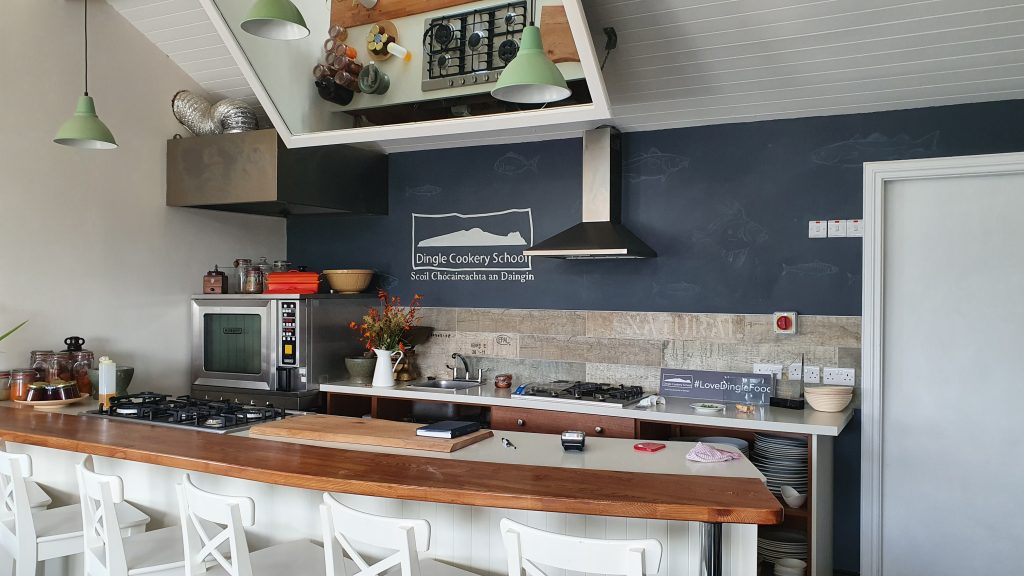
A course at the delightful Dingle Cookery School in Dingle taught me how to cook with seaweed that I had just foraged on Wine Strand.
Upon arrival at the school, chef Mark Murphy and hospitality manager Muireann Nic Giolla Ruaidh greeted us and collected our harvest. After seeing the kinds and amounts of seaweed we had collected, Mark decided how to use it in the dishes he had planned. Muireann started by serving us coffee, tea and sandwiches, which were most welcome after a morning spent clambering over rocks and tide pools.
How to Use Seaweed
Mark started the course by emphasizing how healthy and nutritious seaweeds are. He explained that people around the world have traditionally used seaweeds in their cooking. However, the Japanese have turned it into a particularly high art. For example, they use nori to make sushi, wakame to make miso soup, and kombu to make dashi and hijiki. Most grocery stores now carry such products, making it easy to incorporate them into our diets. (Even if we live far from the sea.)
One of the unique aspects of many seaweeds, Mark explained, is that they provide the taste of “umami” in the diet. Most Westerners are familiar with the other four basic tastes of food: sweetness, sourness, bitterness and saltiness. But we are often unfamiliar with this fifth taste, which is sometimes referred to as “savory.” Mark explained that umami is an almost meat-like taste characteristic of broths and cooked meats. (It can therefore add a welcome depth of flavor to vegetarian dishes.)
Mark also said that seaweeds can be used as either a main dish or condiment in just about everything we cook–from bread, salad and soup to main dishes and dessert. Some seaweeds, such as kelp, are generally too tough to eat. However, similar to bay leaves, they can be used to enhance the flavor of soups, stews and more. Fresh seaweed can be preserved by drying, pickling or freezing it.
How to Cook with Seaweed
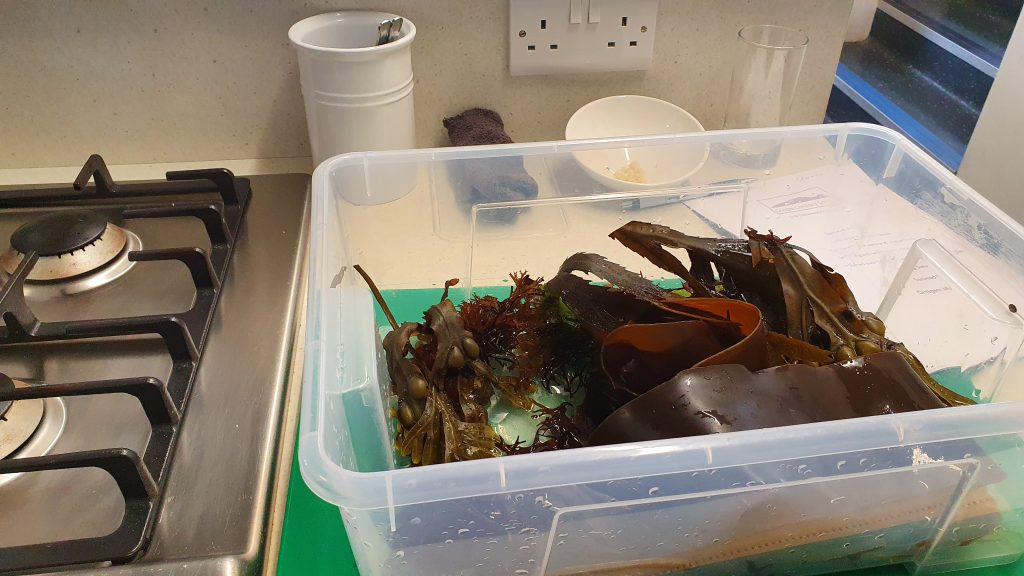
We then moved into the kitchen, where Mark assigned us to our own cooking station. The seaweed we had collected earlier in the day was ready and waiting for us at our stations. Mark had already rinsed it, so it was ready for cooking.
He began by showing us how to put together an Irish soda bread in which he had sprinkled some seaweed. After putting the bread into the oven, Mark prepared the dessert. First he placed a handful of pre-soaked carrageen moss in some milk with vanilla and sugar and brought it to a boil. (Carrageen acts as a thickening agent similar to gelatin.) After letting it simmer gently for a bit, he poured the milk through a strainer and added an egg and some cream. Then he poured the mixture into ramekins and placed them in the refrigerator to cool.
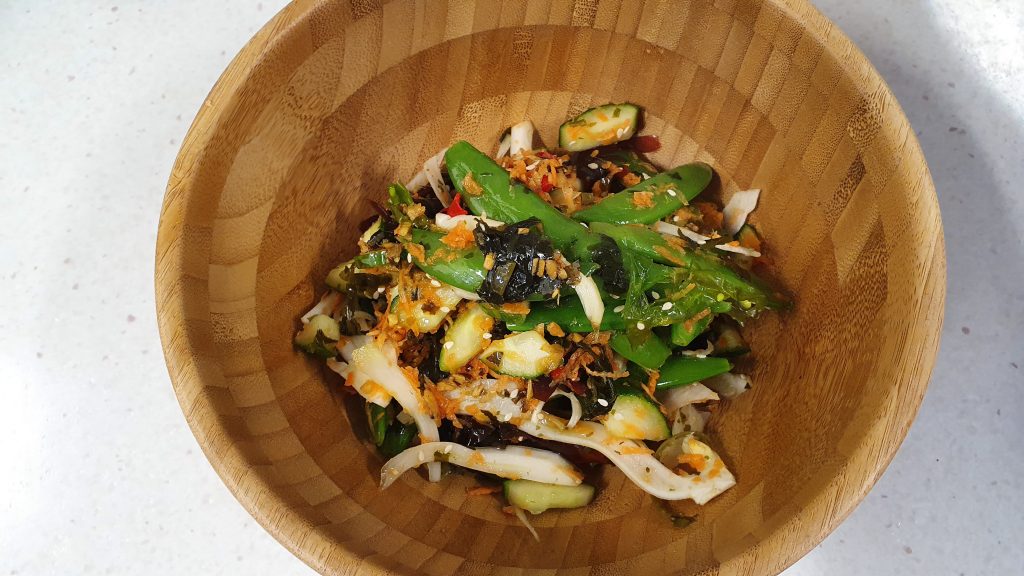
At our individual stations, Mark had us mix together a delicious Japanese-style seaweed salad with some dillisk (dulse) seaweed, cucumber, carrots, fennel, green pea pods and fresh chili. Then he showed us how to create a dressing made from garlic, ginger, soy sauce, rapeseed oil and fresh lime juice.
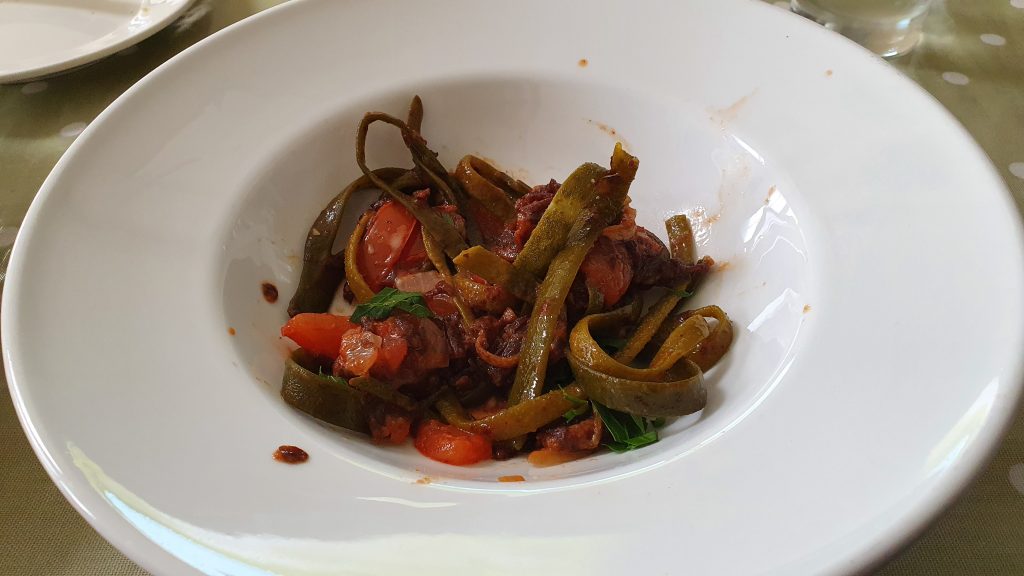
He also had us make a simple tomato sauce consisting of onions, fresh tomatoes, garlic and red chili to serve on top of sea spaghetti.
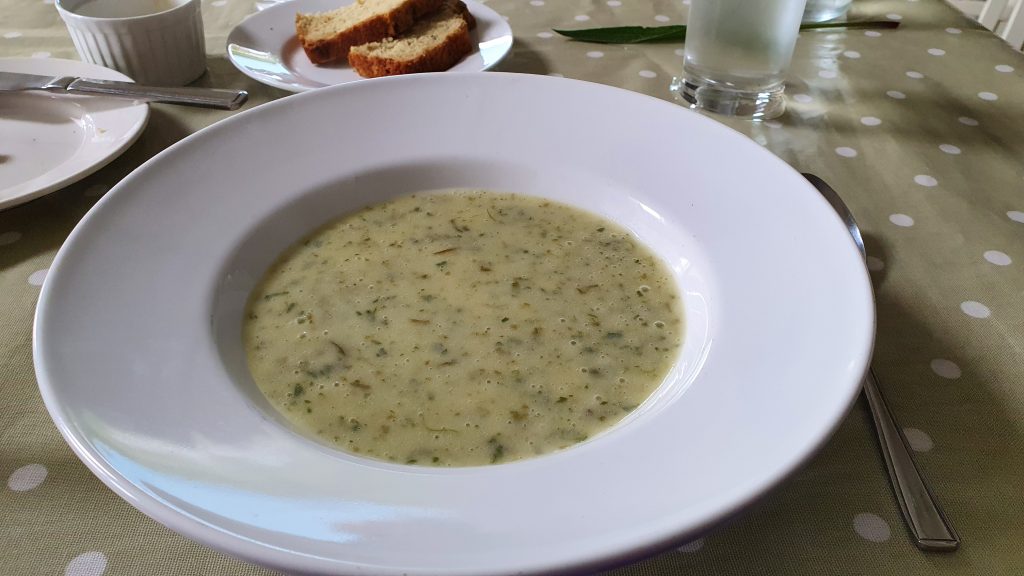
In addition, he demonstrated how to cook a delicious potato, lovage and seaweed soup.
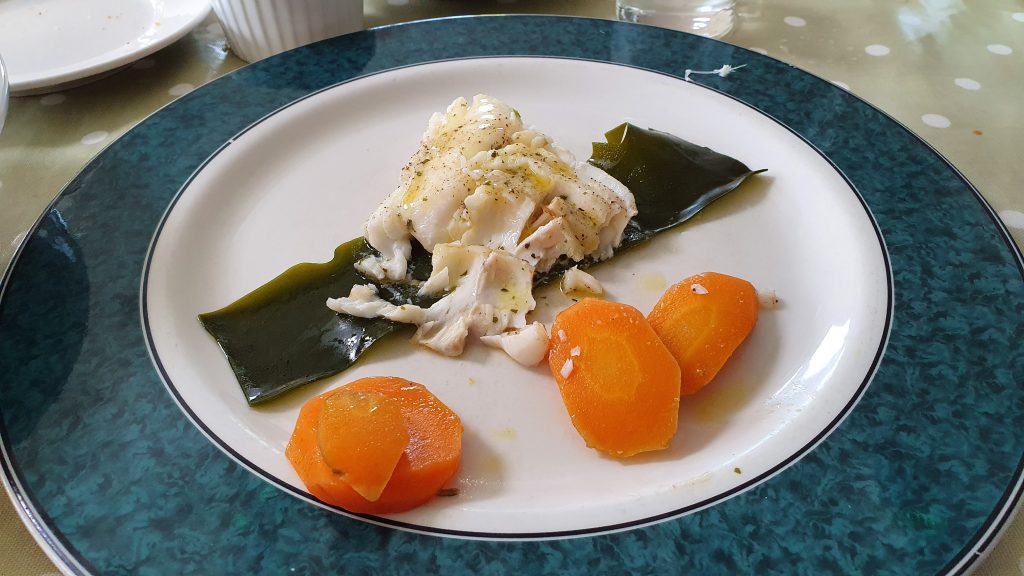
Finally, he showed us how to wrap a filet of cod in a piece of kelp and steam it. (You don’t eat the kelp–it simply imparts a delicate umami flavor to the fish.) On top of this, he placed a pat of seaweed-infused butter. (Sorry about this picture–I had already started to eat the fish before I remembered to take a picture!)
Feasting on the Results
After all of the dishes were ready, the participants went into the dining area and took our assigned seats. Muireann then served each course to us, which was lovely. It was fun for the participants to sit (at socially-mandated distances due to the Covid virus) and get to know each other a bit better.
Final Thoughts
Of course under normal circumstances, you would not put seaweed into every dish! But learning how to cook with seaweed has inspired me to keep experimenting. Why not increase flavor and nutrition, too?
This is the second course I have taken at the Dingle Cookery School, and I plan to take many more now that I am living on the Dingle Peninsula. Not only are the dishes fresh, healthy, creative and delicious, but I also learn how to become a better cook.
For example, while we were preparing the food, Mark showed us how to peel and mash garlic using the flat blade of a large knife. In addition, he had us cook the onions and tomatoes for the spaghetti sauce at a very low temperature to draw out the sweetness of the vegetables. (I tend to cook onions at too high of a temperature and often end up burning them!) Mark also showed us how to listen to the sounds of the cooking vegetables in order to determine whether they are cooking at the right temperature.
I am already looking forward to my next course! It takes place next week and focuses on sourdough bread making.

I would love to take a class at the Dingle Cookery, Clarice! I’m fascinated by the varieties of seaweed and how each might best be used for flavor. In addition, the thought of listening to the vegetables cooking brought to mind a conversation I had with someone recently – to be aware of the smell of something in the oven to determine if it was done or not.
Such fun! I’m thrilled you’ve settled into your environment so quickly and easily! – XO Melissa
Mark Murphy, at the Dingle Cookery School, also determines whether or not a loaf of bread is ready simply by its weight! (I don’t trust myself in that regard yet…)